It was the autumn of the sixteenth year of Long Enjoyment (AD
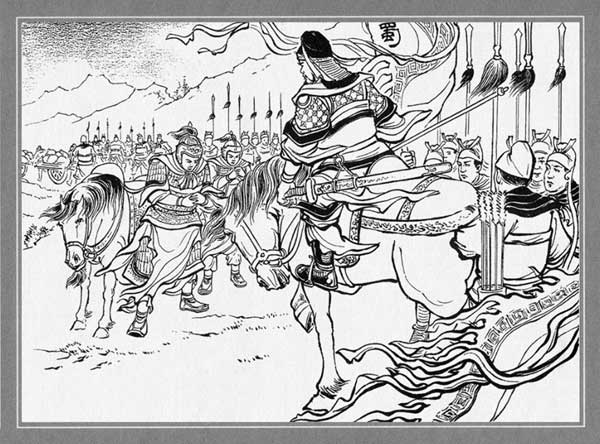
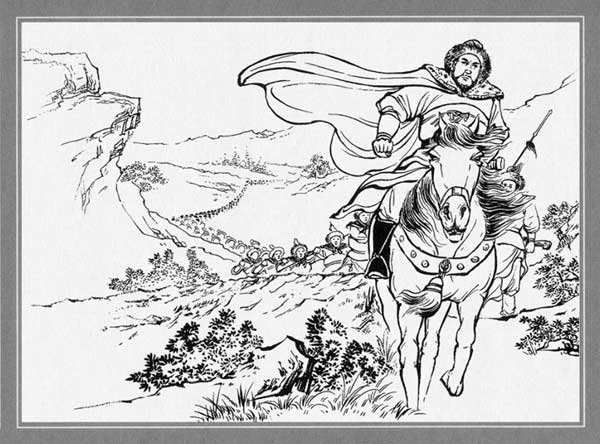
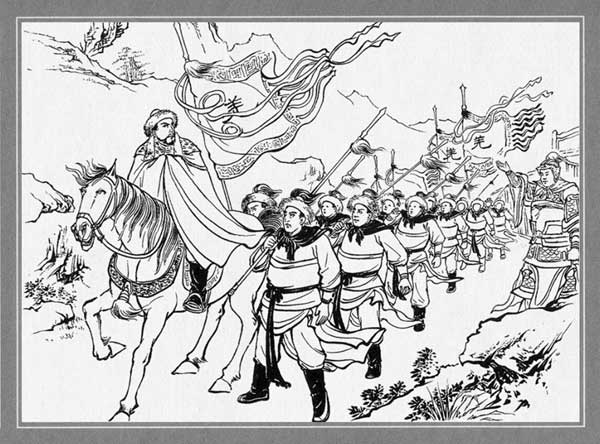
253), and Jiang Wei's army of two hundred thousand was ready to march against
the north. Liao Hua and Zhang Yi were Leaders of the Van; Xiahou Ba was Army
Strategist; Zhang Ni was in command of the commissariat. The army marched out
by the Yangping Pass.
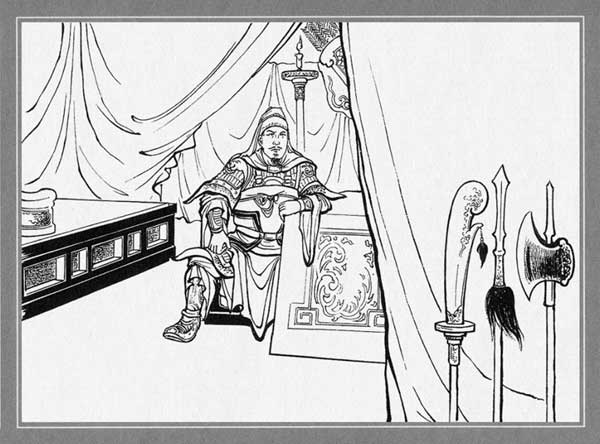
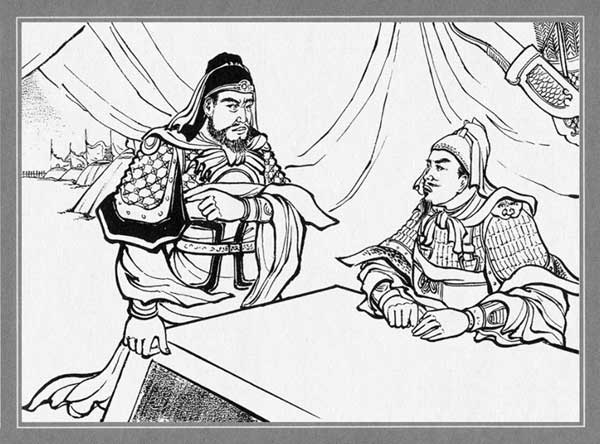
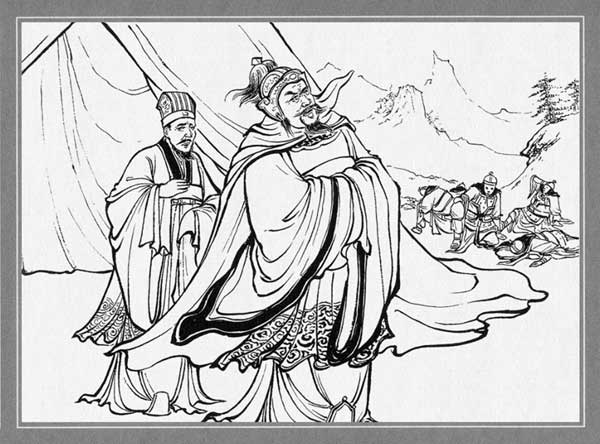
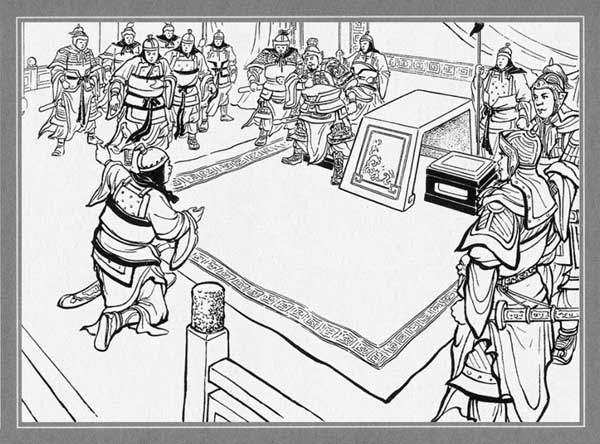
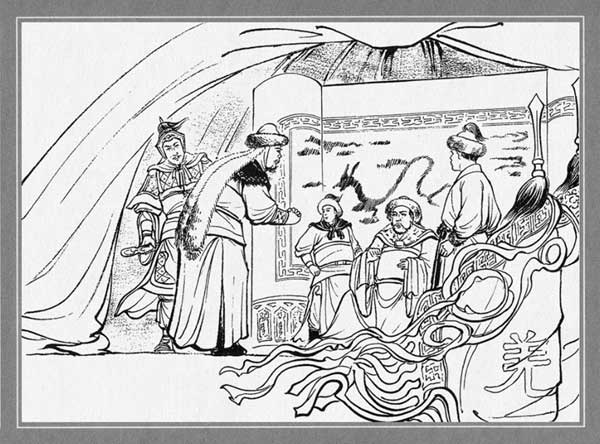
Discussing
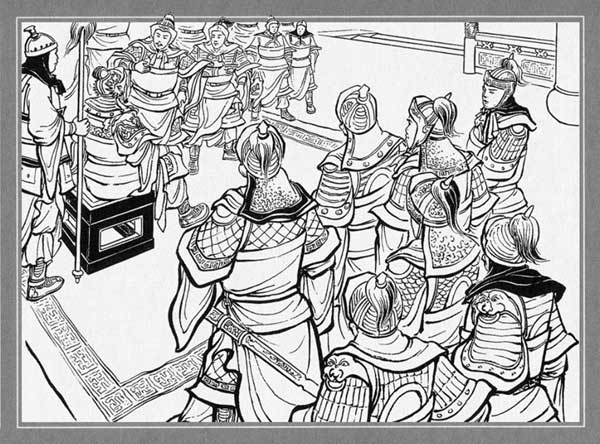
the plan of campaign with Xiahou Ba, Jiang Wei said, "Our former attack on
Yongzhou failed, so this time they will doubtless be even better prepared to
resist. What do you suggest?"
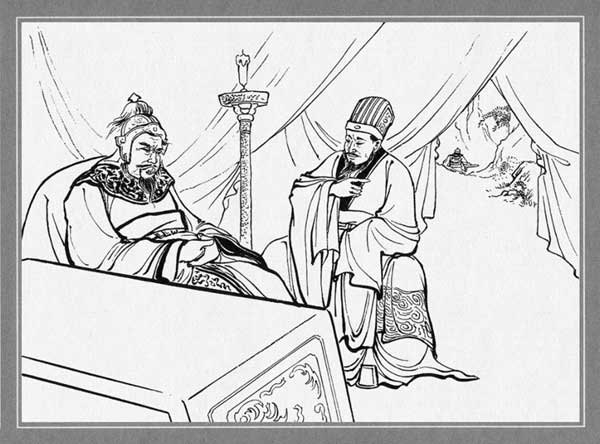
Xiahou
Ba replied, "Nanan is the only well-provided place in all Longshang. If we
take that, it will serve as an excellent base. Our former ill-success was due
to the non-arrival of the Qiangs. Let us therefore send early to tell them to
assemble at Longyou, after which we will move out at Shiying and march to Nanan
by way of Dongting."
"You spoke well," said Jiang Wei.
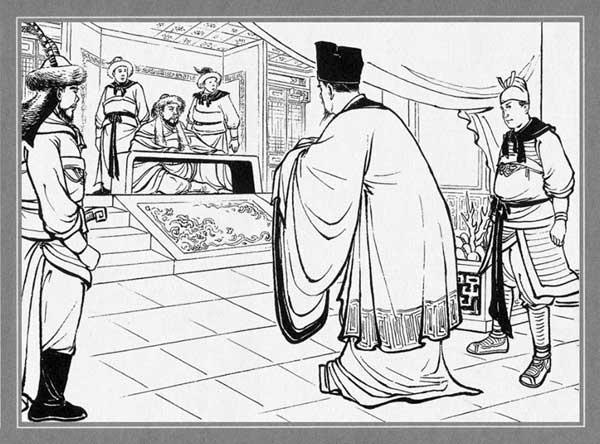
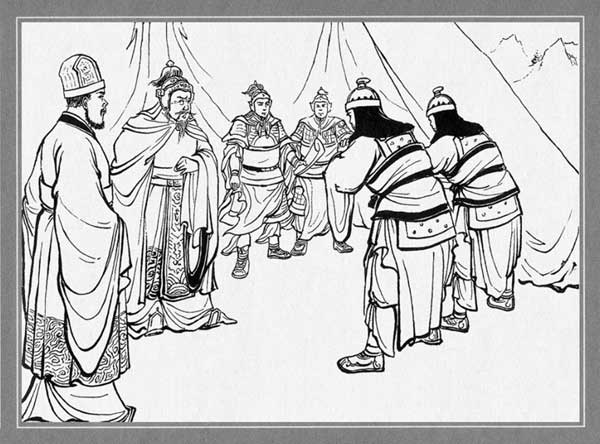
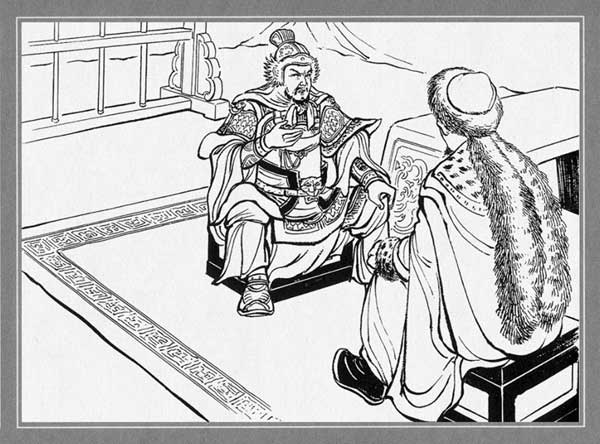
He
at once sent Xi Zheng as his envoy, bearing gifts of gold and pearls and silk
to win the help of the King of the Qiangs, whose name was Mi Dang.
The
mission was successful: King Mi Dang accepted the presents and sent fifty
thousand troops to Nanan under the Qiang General Ehe Shaoge.
When
Guo Huai heard of the threatened attack, he sent a hasty memorial to Capital
Luoyang.
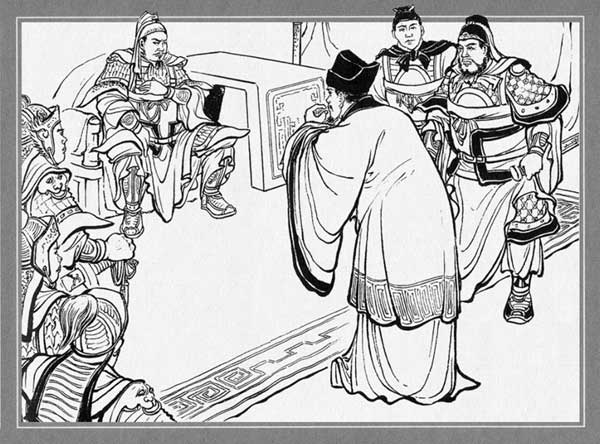
Sima
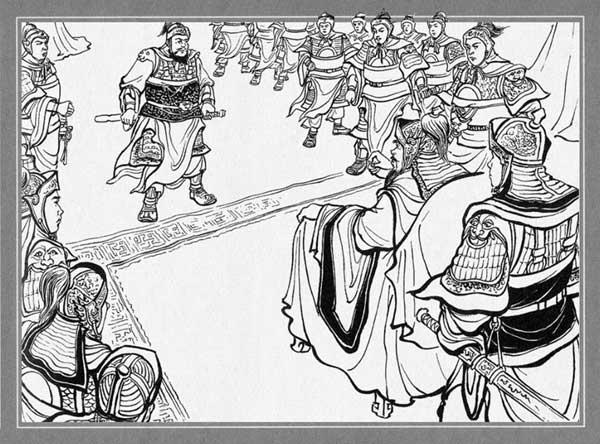
Shi at once asked his leaders, "Who will go out to meet the army from the
west?"
Xu
Zi volunteered, and as Sima Shi had a high opinion of his capacity, he
appointed Xu Zi as Leader of the Van. The brother of the Prime Minister, Sima
Zhao, went as Commander-in-Chief.
The
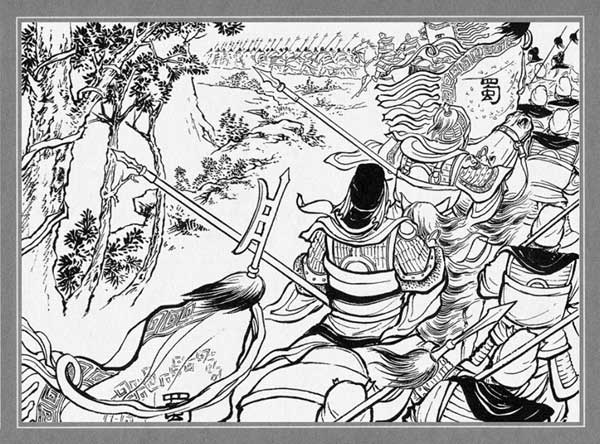
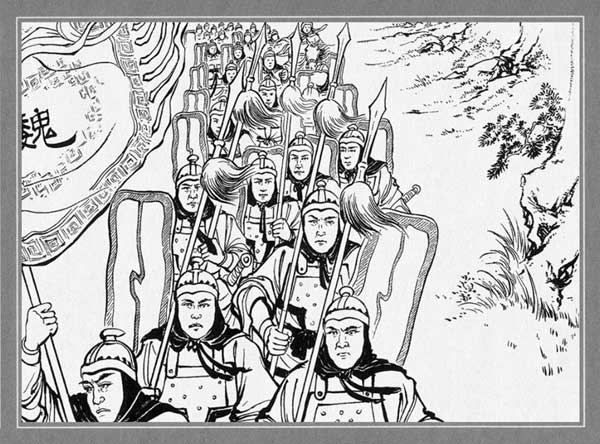
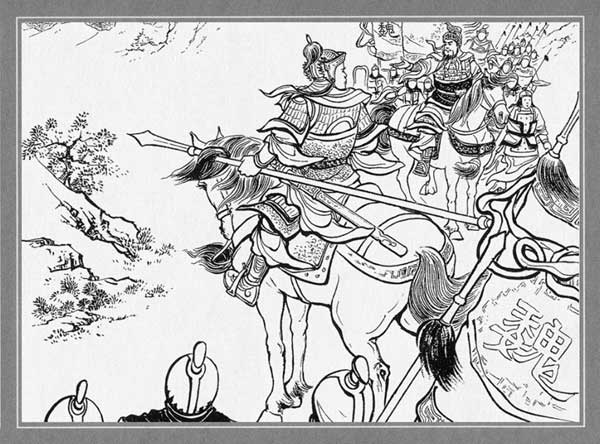
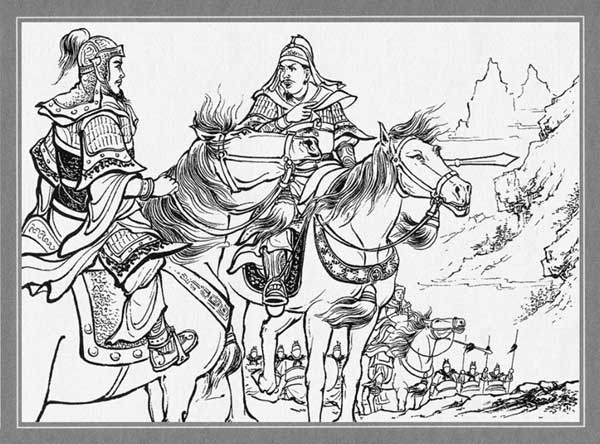
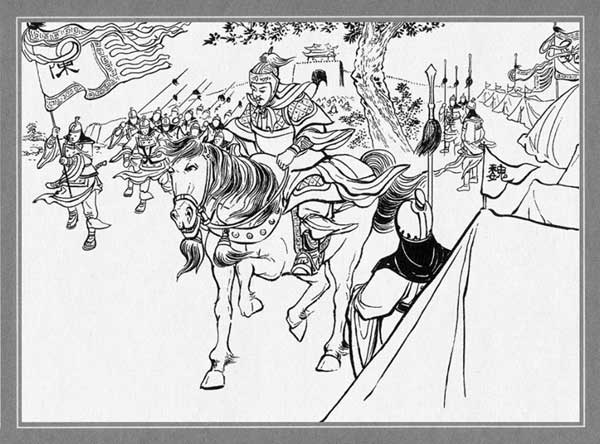
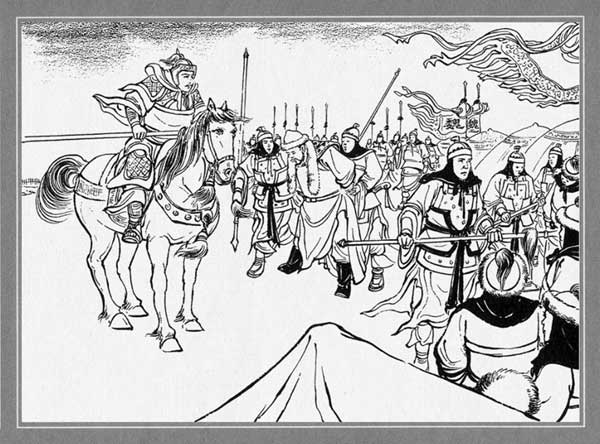
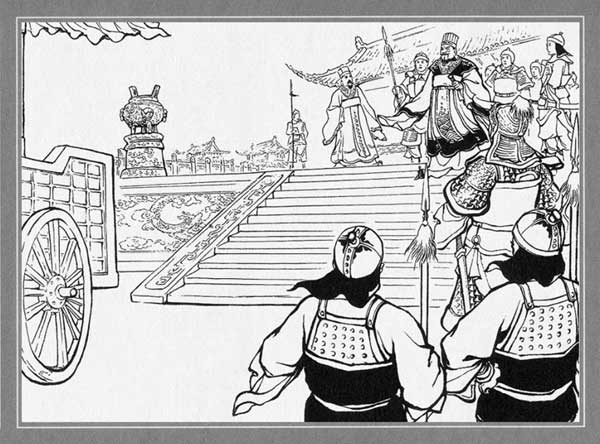
Wei army set out for West Valley Land, reached Dongting, and there fell in with
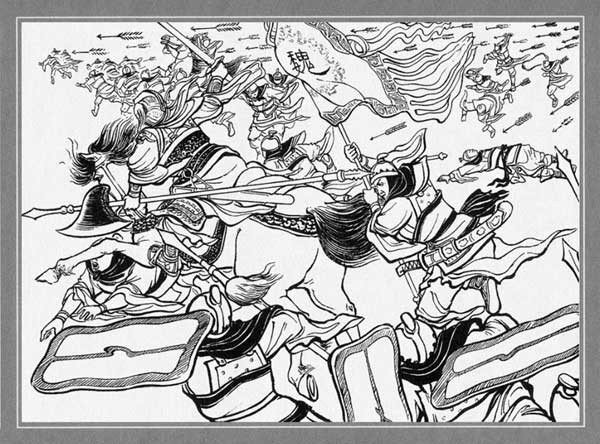
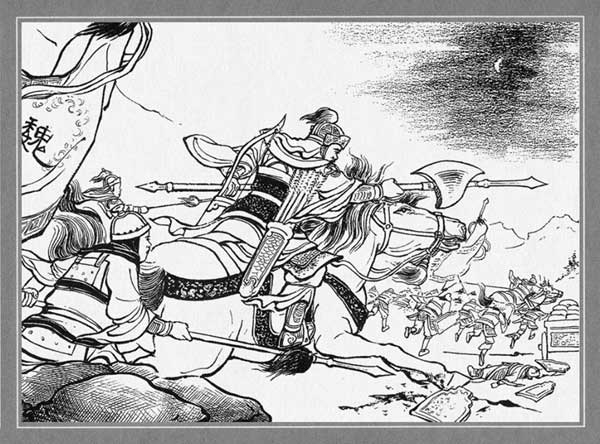
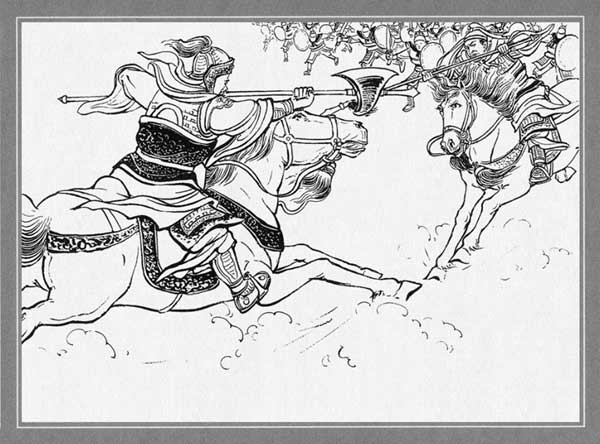
Jiang Wei. When both sides were arrayed Xu Zi, who wielded a mighty
splitter-of-mountains ax as his weapon, rode out and challenged. Liao Hua went
forth to accept, but after a few bouts he took advantage of a feint and fled.
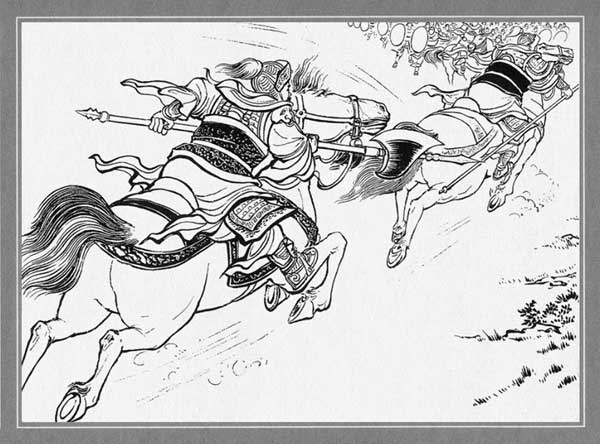
Then
Zhang Yi set his spear and rode forth to continue the fight. He also soon fled
and returned within his own ranks.
Thereupon Xu Zi gave the
signal to fall on in force, and the army of Shu lost the day. They retired ten
miles, Sima Zhao also drew off his troops, and both sides encamped.
"Xu
Zi is very formidable. How can we overcome him?" asked Jiang Wei.
"Tomorrow make pretense of defeat and so draw them into
an ambush," replied Xiahou Ba.
"But
remember whose son this Sima Zhao is," said Jiang Wei. "Sima Zhao
cannot be a novice in war. If he sees a likely spot for an ambush, he will
halt. Now the troops of Wei have cut our transportation many times. Let us do
the same to them, and we may slay this Xu Zi."
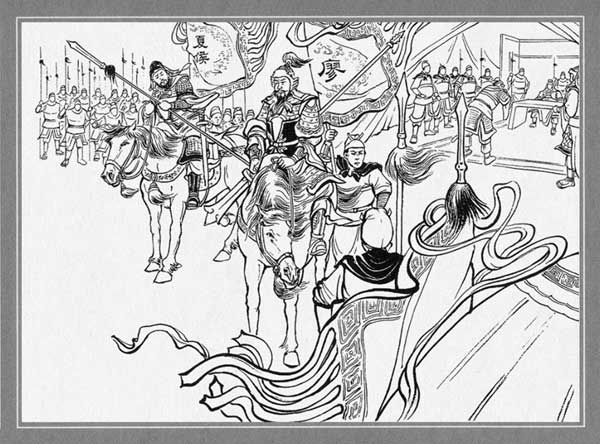
He called in Liao Hua and Zhang Yi and gave them secret orders, sending
them in different directions.
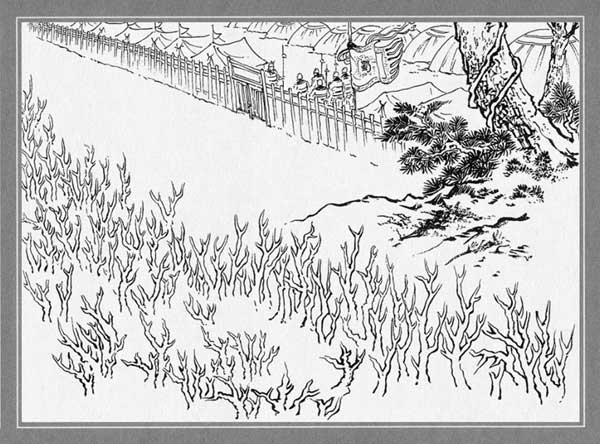
Then
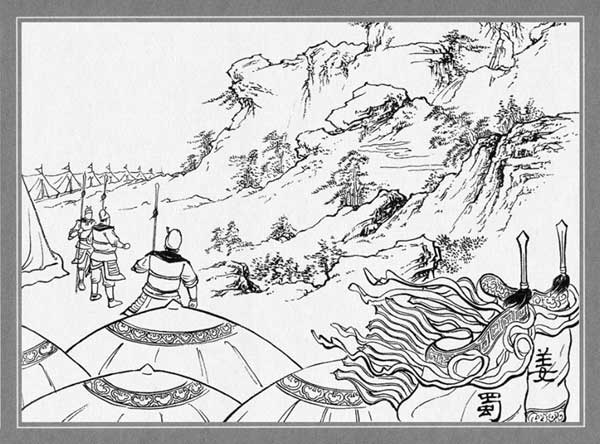
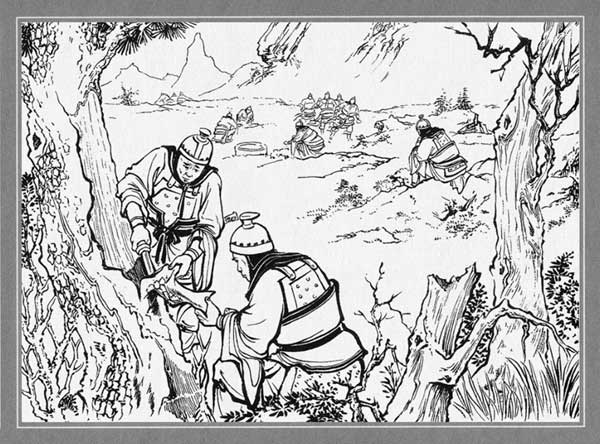
he laid iron thorns along all the approaches and planted thorny barriers as if
making a permanent defense.
When
the troops of Wei came up and challenged, the troops of Shu refused battle.
The
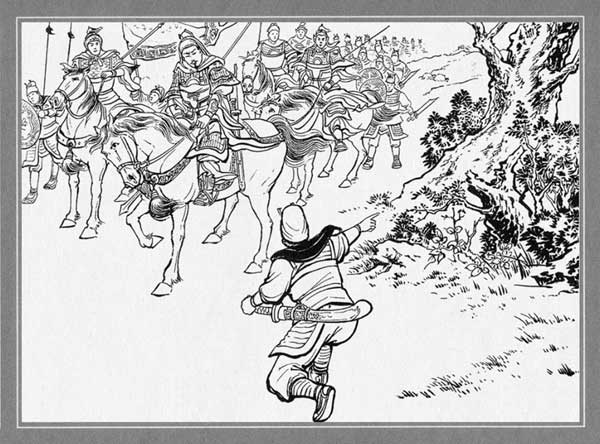
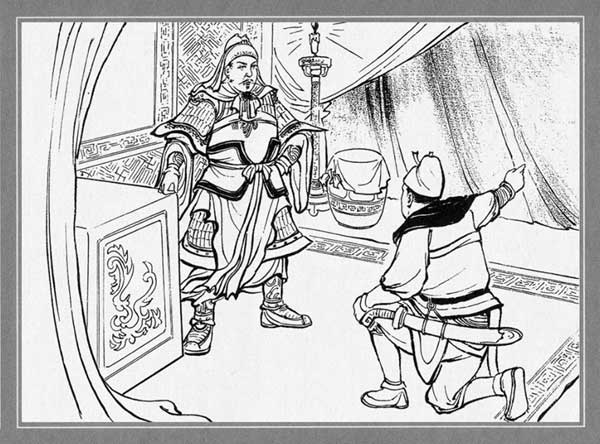
scouts reported to Sima Zhao: "The Shu supplies are coming up along the
rear of Iron Cage Mountain, and they are using the wooden oxen and running
horses as transport. The Shu army are building permanent defenses and are
awaiting the arrival of their allies the Qiang tribes."
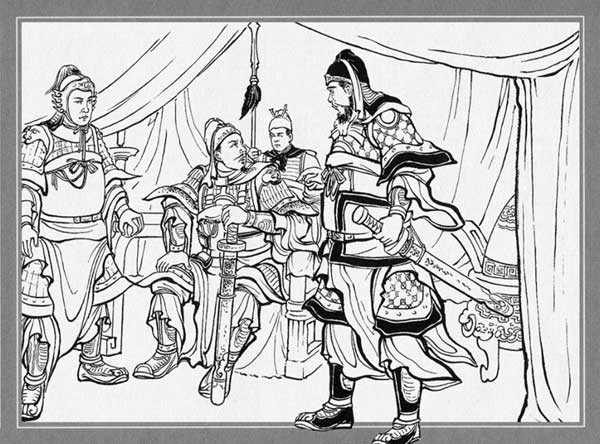
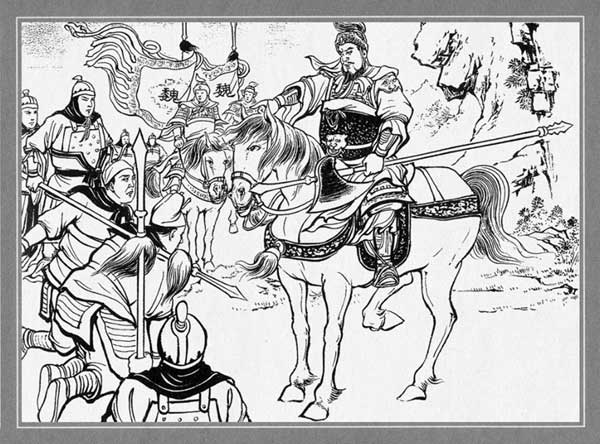
Then said Sima Zhao to Xu Zi, "We formerly defeated the army of Shu
by cutting off supplies, and we can do that again. Let five thousand troops go
out tonight and occupy the road."
About
the middle of the first watch Xu Zi marched across the hills.
When he came to the other
side, he saw a couple of hundred soldiers driving a hundred or so heads of
mechanical animals laden with grain and forage.
His
army rushed down upon them with shouts, and the troops of Shu, seeing that
their road was impassable, abandoned their supplies and ran away.
Xu Zi took possession of
the supply train, which he sent back to his own camp under the escort of half
his troops.
With the other half he set
out in pursuit.
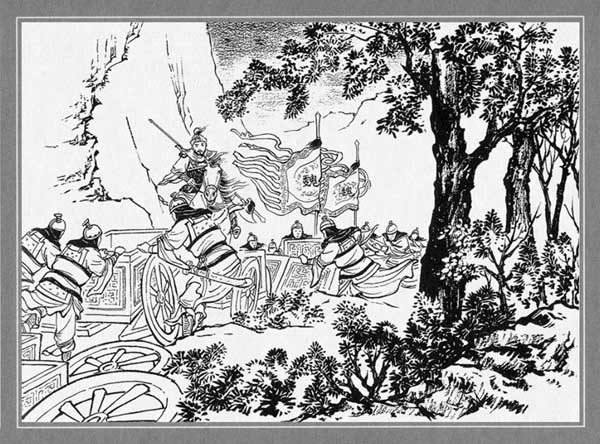
About
three miles away, the road was found blocked with carts set across the track.
Some of his soldiers dismounted to clear the way.
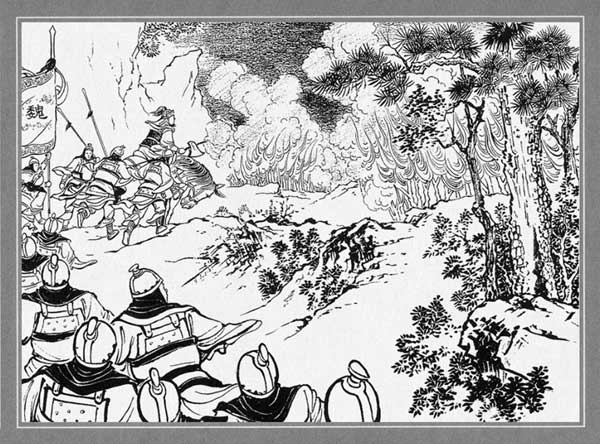
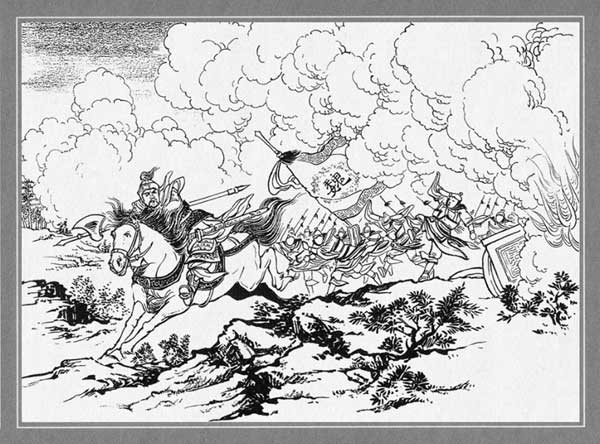
But as they did so, the
brushwood on both sides burst into a blaze.
Xu Zi at once drew off his
force and turned to retire, but coming to a defile he found the road again
blocked with wagons, and again the brushwood began to burn.
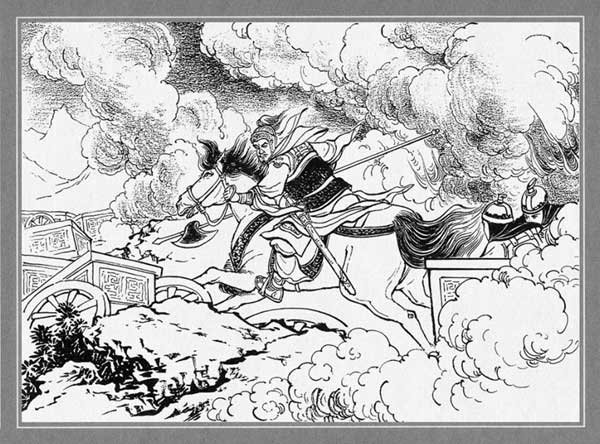
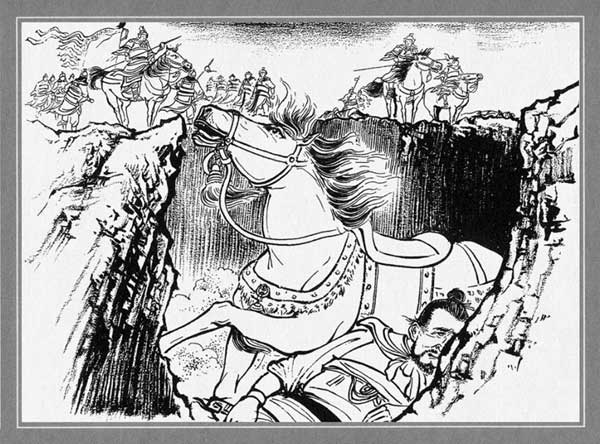
He made a dash to escape,
but before he could get clear a bomb roared, and he saw the troops of Shu
coming down on him from two directions. Liao Hua and Zhang Yi from left and
right fell on Xu Zi with great fury, and the troops of Wei were wholly
defeated. Xu Zi himself got clear, but without any following.
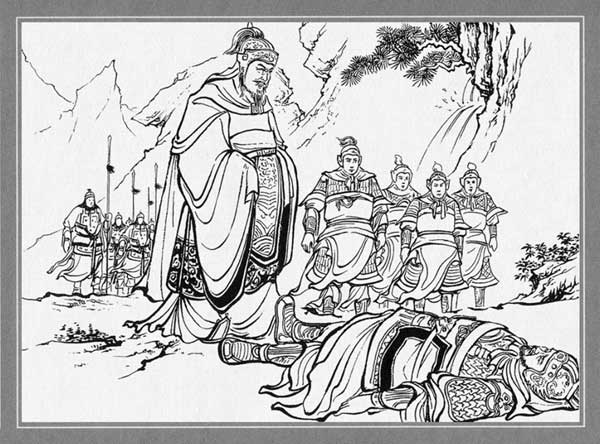
He struggled on till he and
his steed were almost spent with fatigue.
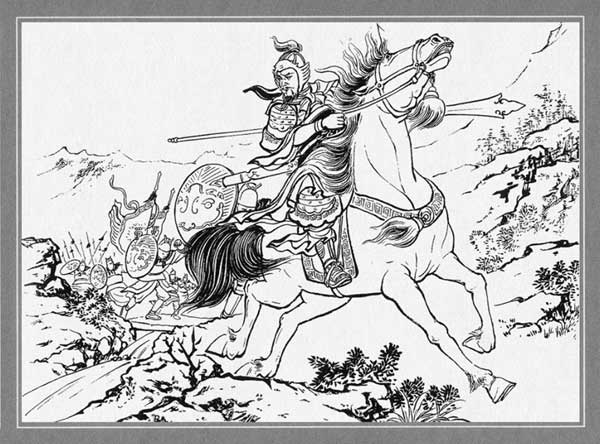
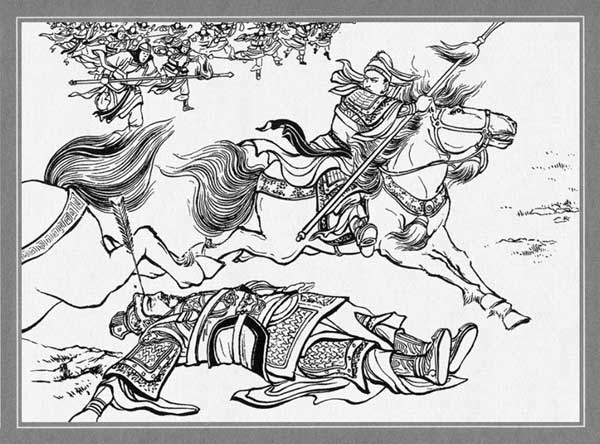
Presently
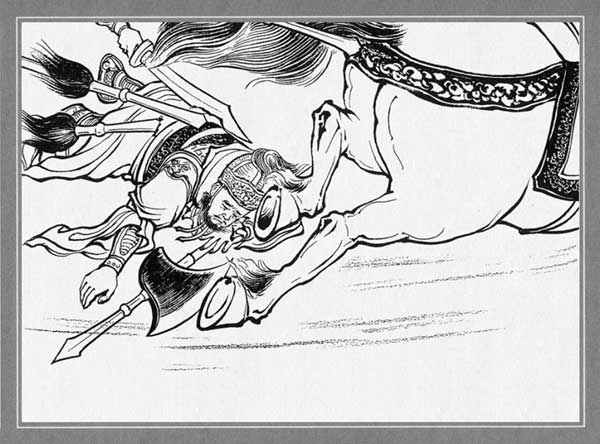
he saw another company of the enemy in his way, and the leader was Jiang Wei.
Before he could make any
resistance, Jiang Wei's spear thrust him down, and as Xu Zi lay on the ground
he was cut to pieces.
Meanwhile
those troops of Wei who had been sent to escort to camp the convoy of supplies
which they had seized were captured by Xiahou Ba.
When
they arrived, they were mistaken by those in the camp for comrades, and the
gates were thrown open.
They
rushed in and began to slay.
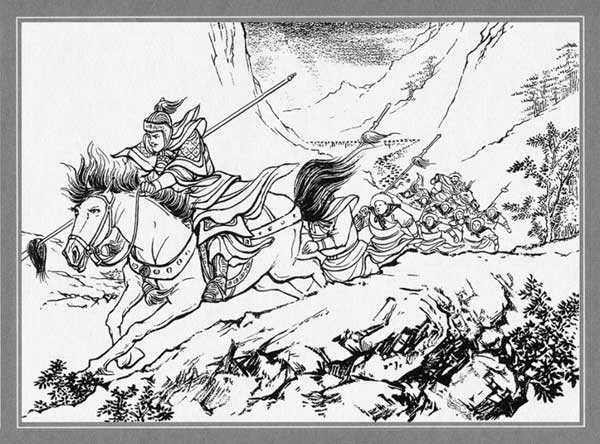
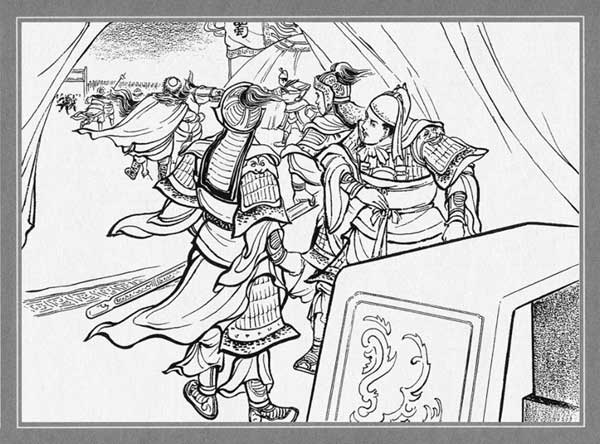
Taken
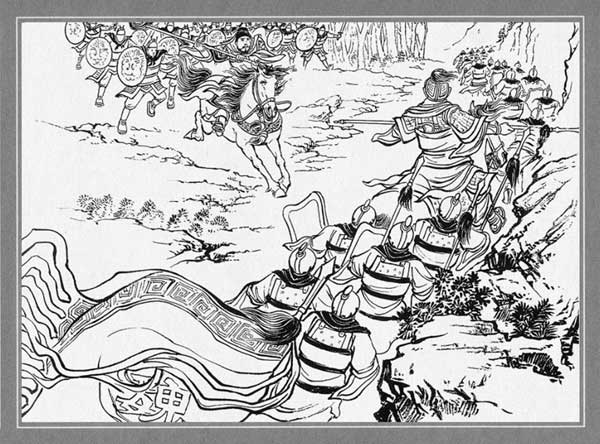
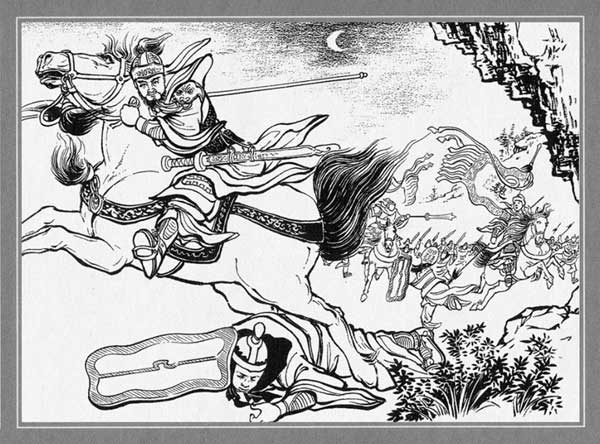
wholly by surprise, Sima Zhao leaped upon his steed and fled.
But
Liao Hua met him and drove him back. Then appeared Jiang Wei in the path of retreat,
so that no road lay open. Sima Zhao made off for the hills, hoping to be able
to hold out on the Iron Cage Mountain.
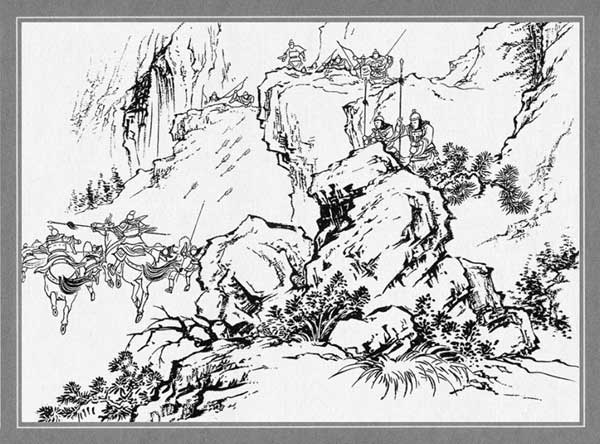
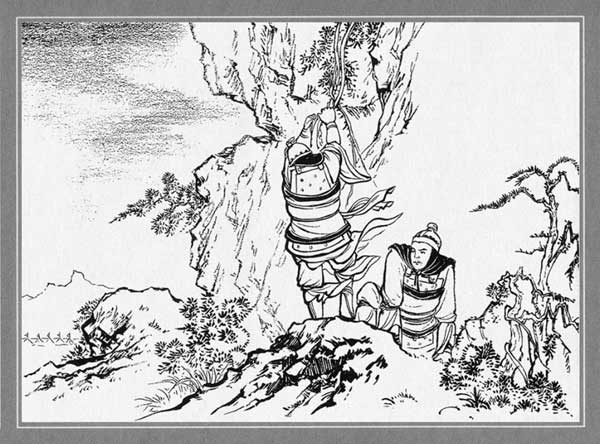
Now there was only one road
up the hill, which rose steeply on all sides.
And the hill had but one
small spring of water, enough to serve a hundred people or so, while Sima
Zhao's force numbered six thousand. Their enemies had blocked the only road of
escape.
This
one fountain was unequal to supplying the needs of the beleaguered army, and
soon they were tormented with thirst.
In
despair, Sima Zhao looked up to heaven and sighed, saying, "Death will
surely come to me here!"
The host of Wei on Iron Cage Mountain
Were once fast held by Jiang Wei's skill;
When Pang Juan first crossed the Maling Hills,
His strategy was reckoned fine
As Xiang Yu at the Nine Mountains;
Both bent opponents to their will.
In
this critical situation Secretary Wang Tao reminded his leader of what Geng
Gong had done in ancient time, saying, "O General, why do you not imitate
Geng Gong, who, being in great need, prostrated himself and prayed at a well,
wherefrom he afterwards was supplied with sweet water?"
So
the leader went to the summit of the hill and knelt beside the spring and
prayed thus:
"The humble Sima Zhao received a command to repulse the
army of Shu. If he is to die here, then may this spring cease its flow, when he
will end his own life and let his soldiers yield to the enemy. But if his
allotted span of life be not reached, then, O Blue Vault, increase the flow of
water and save the lives of this multitude."
Thus
he prayed; and the waters gushed forth in plenty, so that they all quenched
their thirst and lived.
Jiang
Wei had surrounded the hill, holding the army thereon as in a prison.
He said to his officers, "I have always regretted that our great
Prime Minister was unable to capture Sima Yi in the Gourd Valley, but now I
think his son is doomed to fall into our hands!"
However,
news of the dangerous position of Sima Zhao had come to Guo Huai, who set about
a rescue.
Chen Tai said to him, "Jiang Wei has made a league with the Qiangs,
and they have arrived to help him. If you go away to rescue Sima Zhao, the
Qiangs will attack from the rear. Therefore I would propose to send someone to
the tribespeople to try to create a diversion and get them to retire. If they
are disposed of, you may go to the rescue of Sima Zhao."
Guo Huai saw there was much
reason in this, and told Chen Tai to take a force of five thousand troops and
go to the camp of the King of the Qiangs.
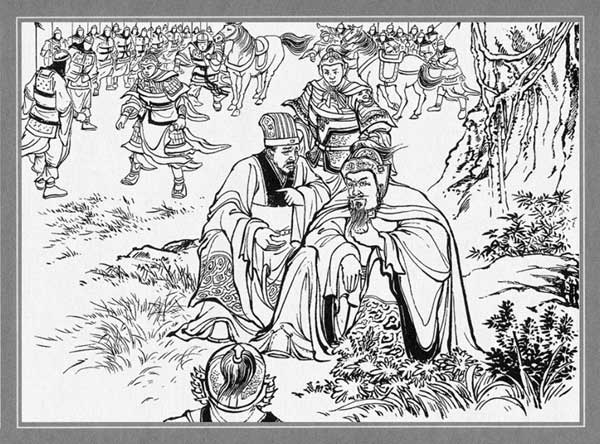
When
Chen Tai reached the camp, he threw off his armor and entered weeping and
crying that he was in danger of death.
He said, "Guo Huai sets himself up as superior to everyone and is
trying to slay me. Therefore I have come to offer my services to you. I know
all the secrets of the Wei army, and, if you will, this very night I can lead
you to their camp. I have friends in the camp to help, and you can destroy
it."
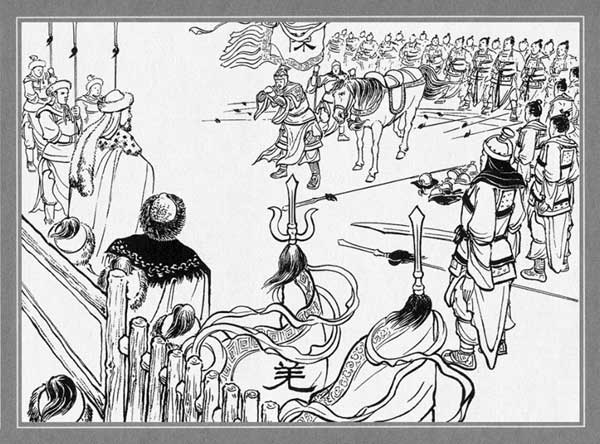
King Mi Dang was taken with
the scheme, and sent his General Ehe Shaoge to go with Chen Tai.
The
deserters from Wei were placed in the rear, but Chen Tai himself rode with the
leading body of the Qiangs. They set out at the second watch and soon arrived.
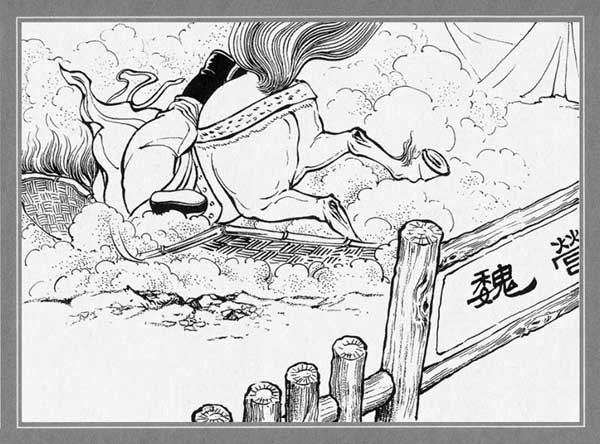
They found the gates open, and Chen Tai rode in boldly.
But
when Ehe Shaoge and his troops galloped in, there suddenly arose a great cry as
soldiers and horses went tumbling into great pits.
At the same time Chen Tai
came round in the rear and attacked, while Guo Huai appeared on the flank. The
Qiangs trampled each other down, and many were killed. Those who escaped death
surrendered, and the leader, Ehe Shaoge, committed suicide in a pit.
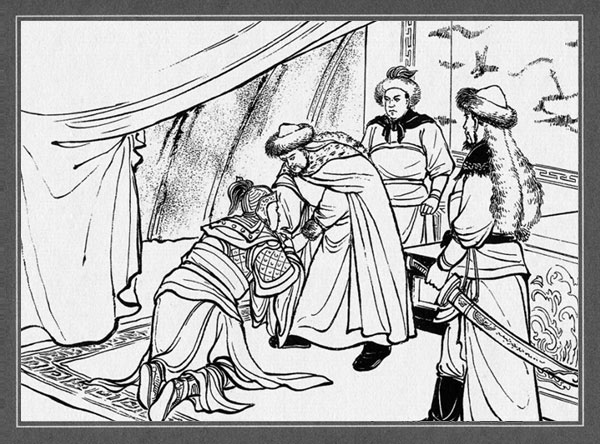
Guo
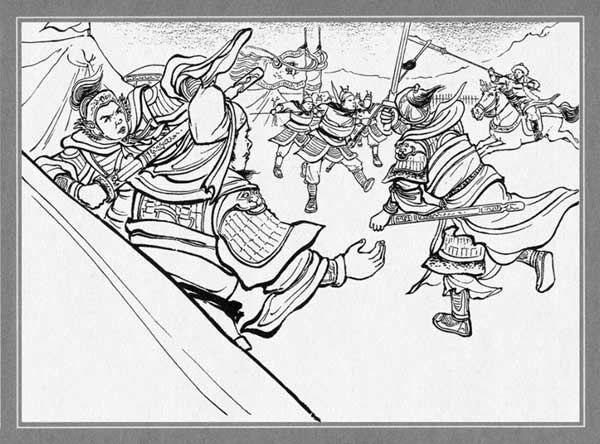
Huai and Chen Tai then hastened back into the camp of the Qiangs. Mi Dang,
taken unprepared, rushed out of his tent to get to horse, but was made
prisoner.
He
was taken before Guo Huai, who hastily dismounted, loosed the prisoner's bonds,
and soothed him with kindly words.
"Our government has always regarded you as a loyal and true
friend," said Guo Huai. "Why then are you helping our enemies?"
Mi Dang sank to the ground
in confusion, while Guo Huai continued, "If you will now raise the siege
of Iron Cage Mountain and drive off the troops of Shu, I will memorialize the
Throne and obtain a substantial reward for you."
Mi
Dang agreed. He set out forthwith, his own army leading and the army of Wei in
the rear.
At
the third watch he sent on a messenger to tell Jiang Wei of his coming.
And
the Shu leader was glad. Mi Dang was invited to come.
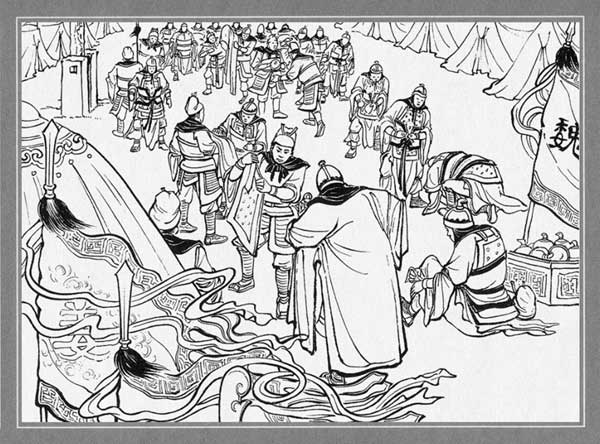
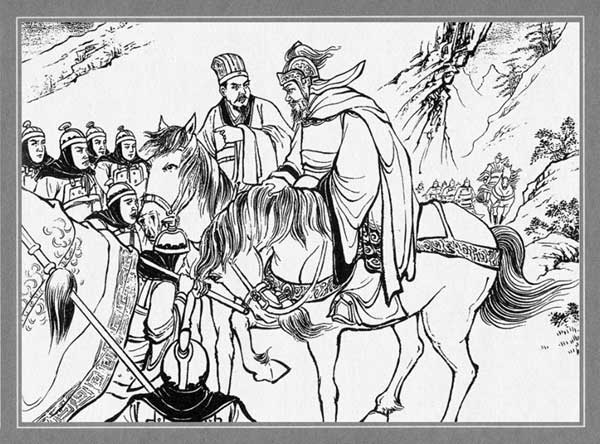
On the march the soldiers of Wei had mingled with the Qiangs,
and many of them were in the forefront of the army. As they drew near the camp,
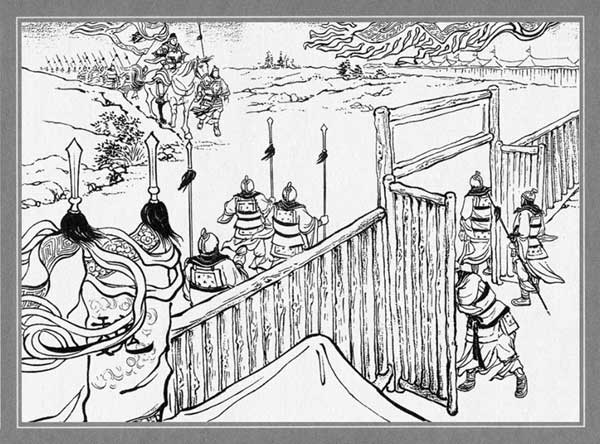
Jiang Wei gave order: "The army are to camp outside. Only the King can
enter the gate."
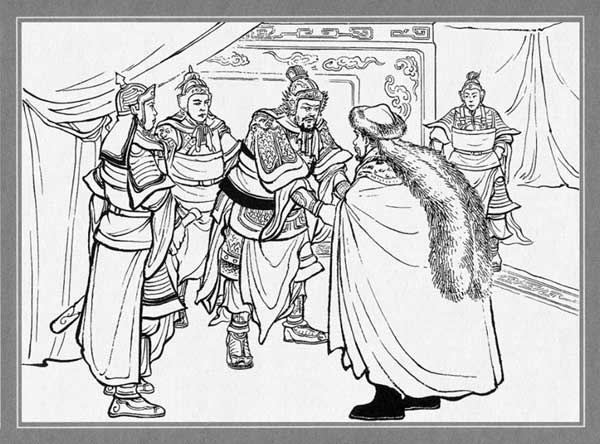
Mi
Dang went up toward the gate with a hundred or more followers, and Jiang Wei
with Xiahou Ba went to welcome him.
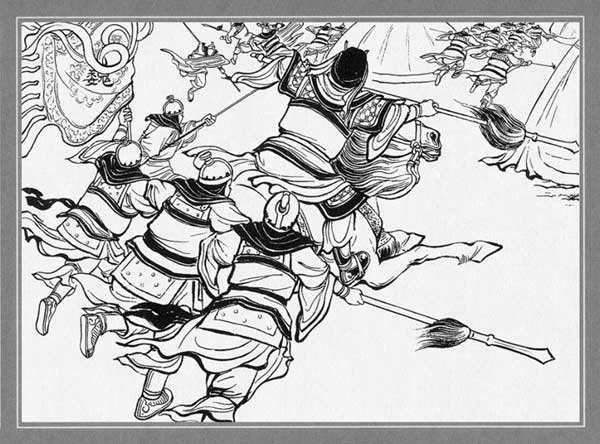
Just as they met, before Mi
Dang could say a word, the Wei generals dashed on past him and set on to slay.
Jiang Wei was taken aback, leaped on his steed and fled, while the mixed force
of troops of Wei and Qiangs drove the camp defenders before them and sent them
flying.
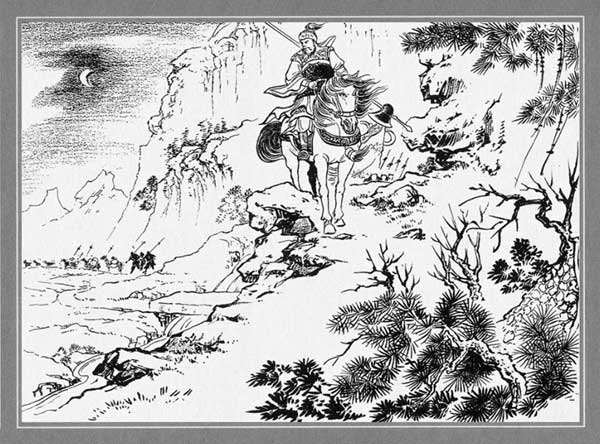
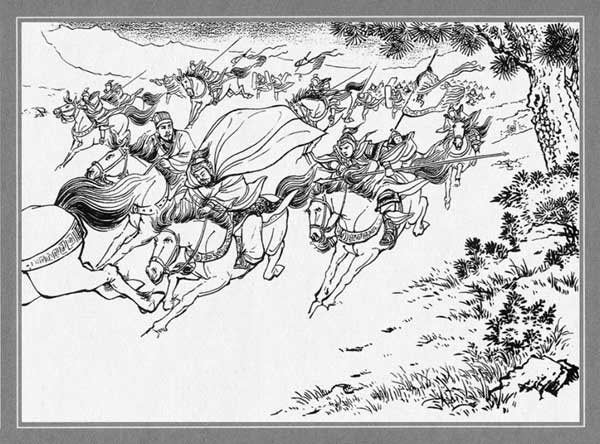
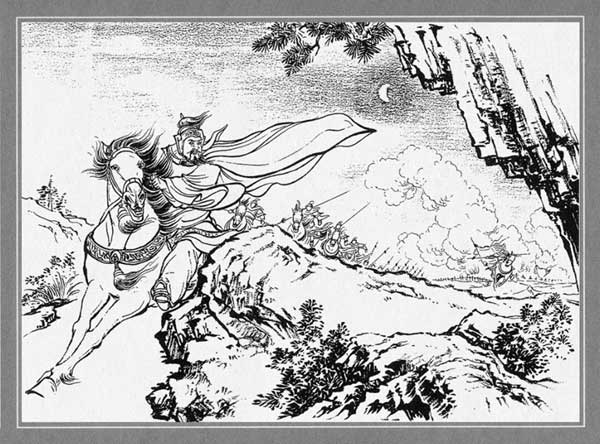
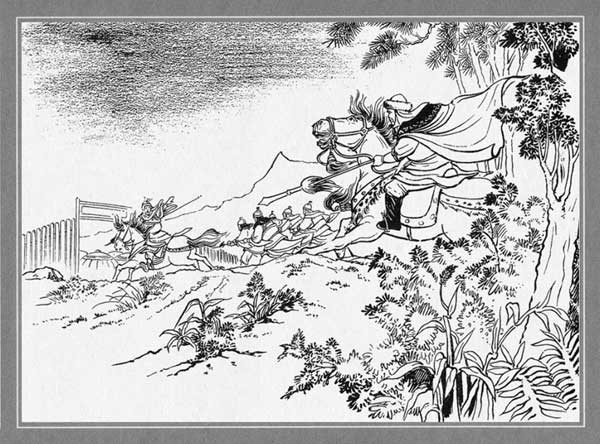
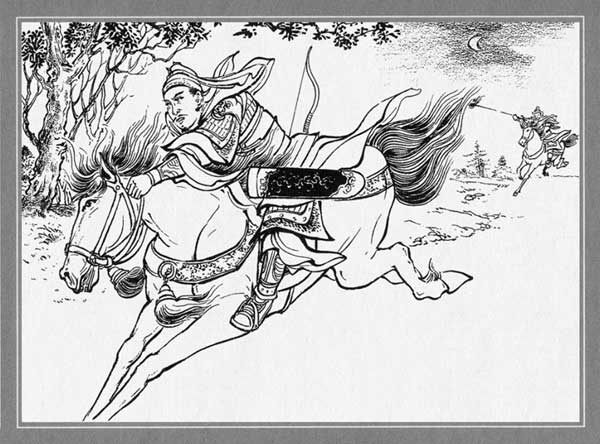
When
Jiang Wei leaped upon his steed at the gate, he had no weapon in his hand, only
his bow and quiver hung at his shoulder. In his hasty flight the arrows fell
out and the quiver was empty, so when he set off for the hills with Guo Huai in
pursuit, Jiang Wei had nothing to oppose to the spears of his pursuers.
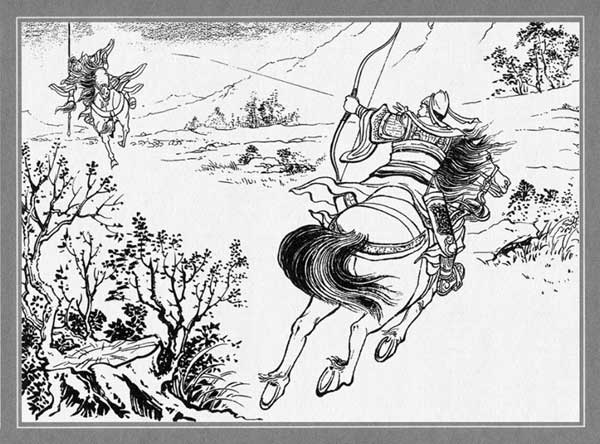
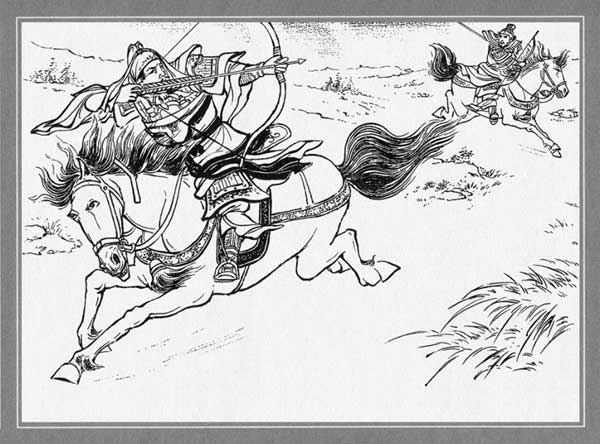
As they came near he laid
hands upon his bow and made as if to shoot. The string twanged and Guo Huai
blenched.
But
as no arrow went flying by, Guo Huai knew Jiang Wei had none to shoot. Guo Huai
therefore hung his spear, took his bow and shot.
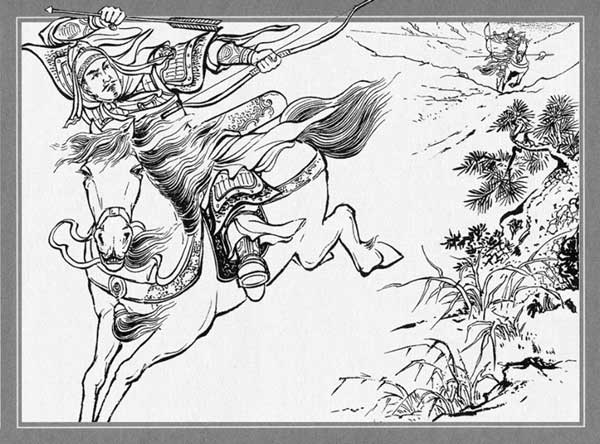
Jiang
Wei caught the arrow as it flew by and fitted it to his bowstring.
He
waited till Guo Huai came quite near, when he pulled the string with all his
force and sent the arrow flying straight at Guo Huai's face. Guo Huai fell even
as the bowstring sang.
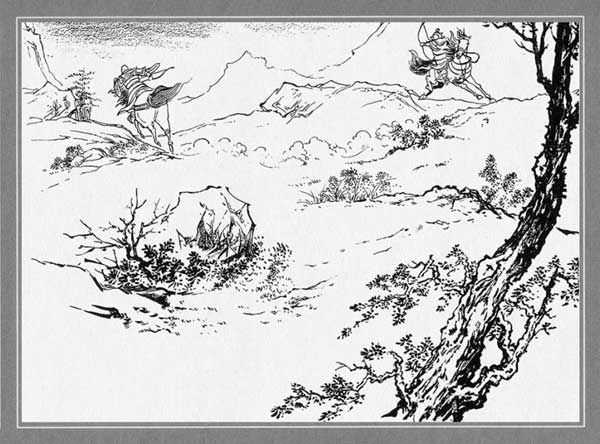
Jiang Wei pulled up and
turned to finish his fallen enemy, but the soldiers of Wei were nearly upon
him, and he had only time to snatch up Guo Huai's spear and ride off. Now that
Jiang Wei was armed and their own leader wounded, the soldiers of Wei had no
more desire to fight.
They
picked up their general and carried him to camp. There the arrow-head was
pulled out, but the flow of blood could not be stanched, and Guo Huai died.
Sima
Zhao descended from the hill as soon as Jiang Wei moved away, and pursued some
distance before returning.
Xiahou
Ba forced his way out and rejoined Jiang Wei as soon as he could, and they
marched away together. The losses of Shu in this defeat were very heavy. On the
road they dared not halt to muster or reform, but went helter-skelter into
Hanzhong. In that campaign, though the Shu army were defeated, they had killed
Xu Zi and Guo Huai on the other side and had damaged the prestige of Wei. Thus
Jiang Wei's achievement made up for his offense.
After
rewarding the Qiangs for their help, Sima Zhao led his army back to Capital
Luoyang, where he joined his brother Sima Shi in administering the government.
They were too strong for any of the officers to dare opposition, and they
terrorized Cao Fang, the Ruler of Wei, so that he shook with fright whenever he
saw Sima Shi at court, and felt as if needles were being stuck into his back.
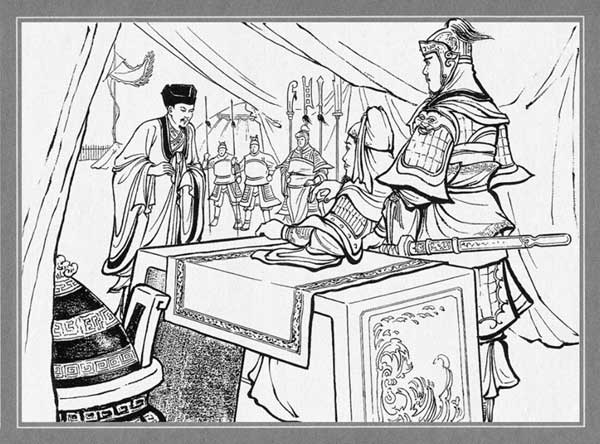
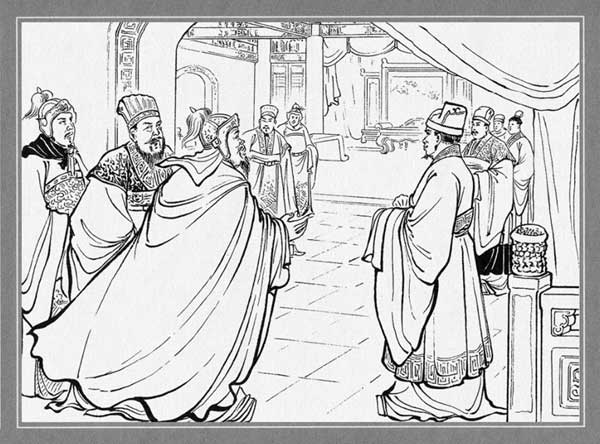
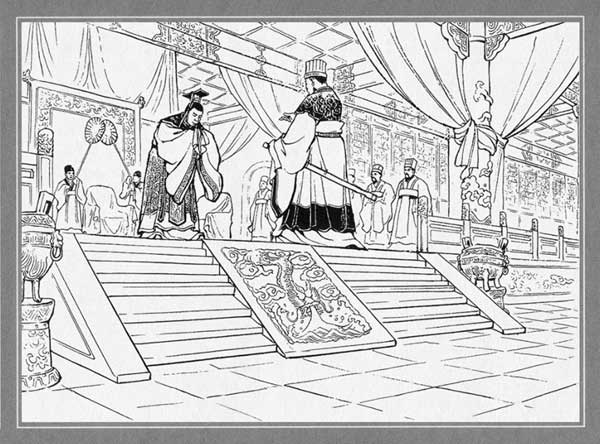
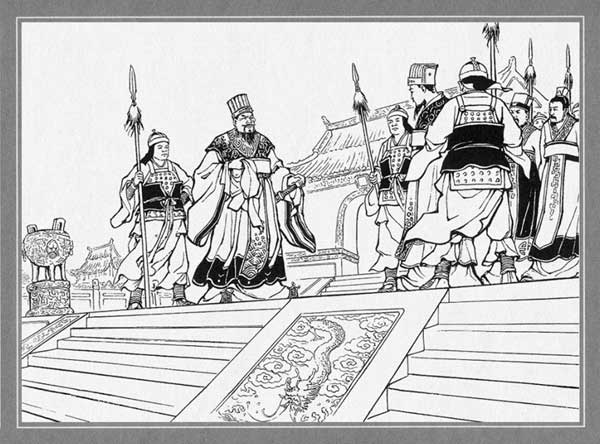
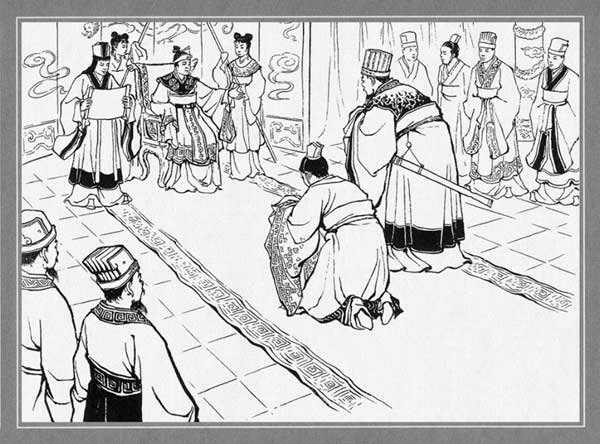
One day, when the Ruler of
Wei was holding a court, Sima Shi came into the hall wearing his sword. Cao
Fang hastily left his dragon throne to receive him.
"What does this mean?
Is this the correct etiquette for a prince when his minister approaches?"
said Sima Shi, smiling. "I pray Your Majesty remember your dignity and
listen while the ministers address the Throne."
Court business then
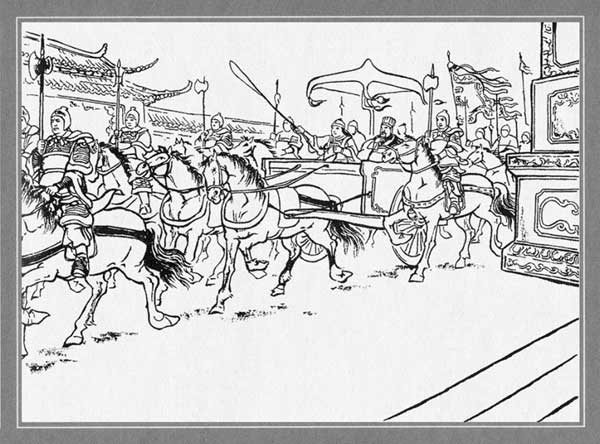
proceeded. Sima Shi decided every question without reference to the Ruler of
Wei; and when Sima Shi retired, he stalked haughtily down the hall and went
home, followed by his escort, which numbered thousands of horse and foot.
When
the Ruler of Wei left the court, only three followed him to the private
apartments. They were Minister Xiahou Xuan, Secretary Li Feng, and High
Minister Zhang Qi. Zhang Qi was the father of his consort, Empress Zhang.
Sending away the servants, Cao Fang and these three went into a private
chamber.
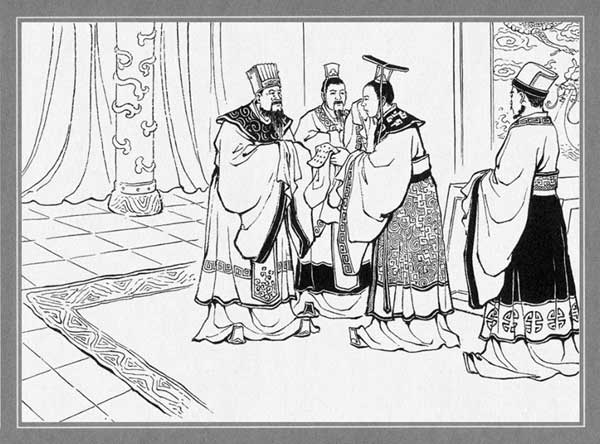
Seizing
his father-in-law's hand, Cao Fang began to weep, saying, "That man Sima
Shi treats me as a child and regards the officers of state as if they were so
many straws. I am sure the throne will be his one day."
And he wept bitterly.
Said
Li Feng, "Do not be so sad, Sire. I am but a poor sort of person. But if
Your Majesty will give me authority, I will call together all the bold people
in the country and slay this man."
"It
was from fear of this man that my brother Xiahou Ba was forced to go over to
Shu," said Xiahou Xuan. "If Sima Shi were destroyed, my brother could
return. I belong to a family related to the rulers of the state for many
generations, and I cannot sit still while a wretch ruins the government. Put my
name in the command as well, and we will work together to remove him."
"But
I am afraid we can not overcome him," said Cao Fang.
They
wept and said, "We pledge ourselves to work together for the destruction
of the tyrant, and to show our gratitude to Your Majesty!"
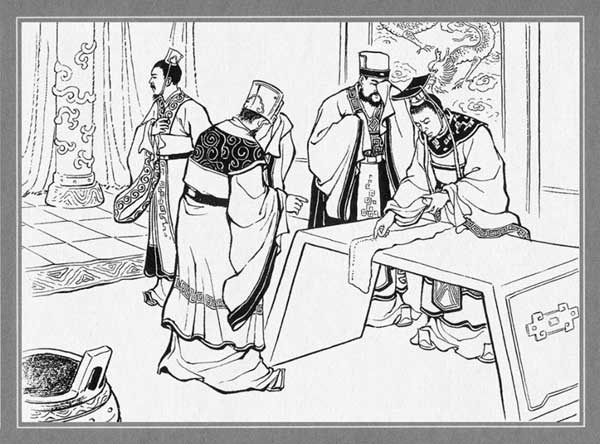
Cao Fang them stripped himself of his innermost garment, gnawed his
finger till the blood flowed, and with his finger-tip traced a command in
blood.
He
gave it to his father-in-law, Zhang Qi, saying, "My ancestor, Emperor Cao,
put to death Dong Cheng for just such a matter as this, so you must be
exceedingly careful and maintain the greatest secrecy."
"Oh, why use such ill-omened words?" cried Li Feng. "We
are not like Dong Cheng, and Sima Shi cannot compare to the Founder. Have no
doubts."
The
three conspirators took leave and went out carrying the edict with them. Beside
the Donghua Gate of the Palace, they saw Sima Shi coming to meet them wearing a
sword. Following him were many armed guards. The three ministers took the side
of the road to let the party go by.
"Why
are you three so late in leaving the Palace?" asked Sima Shi.
"His
Majesty was reading, and we stayed with him," said Li Feng.
"What
was he reading?"
"The
histories of the Xia, Shang, and Zhou dynasties."
"What
questions did the Emperor ask as he read those books?"
"He
asked about Yi Yin and how he upheld the Shang; and the Duke of Zhou, how he
acted when he was regent. And we told His Majesty that you were both Yi Yin and
the Duke of Zhou to him."
Sima
Shi smiled grimly and said, "Why did you compare me with those two when in
your hearts you think me a rebel like Wang Mang and Dong Zhuo?"
"How
should we dare when we are your subordinates?" said the three ministers.
"You
are a lot of flatterers," said Sima Shi, angrily. "And what were you
crying about in that private chamber with the Emperor?"
"We
did no such thing."
"Your
eyes are still red: You cannot deny that!"
Xiahou
Xuan then knew that the secrecy had been showed, so he broke out into a volley
of abuse, crying, "Well, we were crying because of your conduct, because
you terrorize over the Emperor and are scheming to usurp the Throne!"
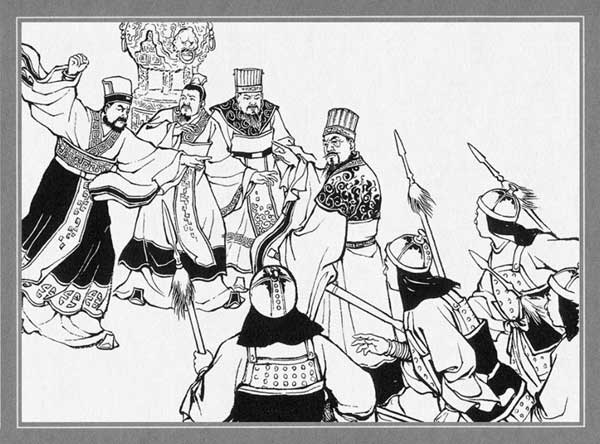
"Seize
him!" roared Sima Shi.
Xiahou
Xuan threw back his sleeves and struck at Sima Shi with his fists, but the
lictors pulled him back.
Then
the three were searched, and on Zhang Qi was found the blood-stained garment of
the Emperor. They handed it to their chief, who recognized the object of his
search, the secret edict. It said:
"The
two Sima brothers have stolen away all my authority and are plotting to take
the Throne. The edicts I have been forced to issue do not represent my wishes,
and hereby all officers, civil and military, may unite to destroy these two and
restore the authority of the Throne. These ends achieved, I will reward those
who help to accomplish them."
Sima Shi, more angry than ever, said, "So you wish to
destroy me and my brother. This is too much!"
He
ordered his followers to execute the three on the public ground by
waist-bisection and to destroy their whole clans.
The
three reviled without ceasing. On the way to the place of execution, they
ground their teeth with rage, spitting out the pieces they broke off. They died
muttering curses.
Sima
Shi then went to the rear apartments of the Palace, where he found the Emperor
talking with his Consort.
Just
as he entered, she was saying to the Emperor, "The Palace is full of
spies, and if this comes out, it will mean trouble for me."
Sima
Shi strode in, sword in hand.
"My
father placed Your Majesty on the throne, a service no less worthy than that of
Duke Zhou; I have served Your Majesty as Yi Yin served his master. Now is
kindness met by enmity and service regarded as a fault. Your Majesty has
plotted with two or three insignificant officials to slay me and my brother.
Why is this?"
"I
had no such intention," said Cao Fang.
In
reply Sima Shi drew the garment from his sleeve and threw it on the ground.
"Who
did this?"
Cao
Fang was overwhelmed: His soul flew beyond the skies, his spirit lied to the
ninth heaven.
Shaking
with fear, he said, "I was forced into it. How could I think of such a thing?"
"To
slander ministers by charging them with rebellion is an aggravated crime,"
said Sima Shi.
Cao
Fang knelt at his feet, saying, "Yes, I am guilty. Forgive me."
"I
beg Your Majesty to rise: The laws must be respected!"
Pointing
to Empress Zhang, Sima Shi said, "She is of the Zhang house and must
die!"
"Spare
her!" cried Cao Fang, weeping bitterly.
But
Sima Shi was obdurate. He bade the lictors lead her away, and she was strangled
with a white silk cord at a Palace gate.
Now I recall another year; and lo!
An empress borne away to shameful death.
Barefooted, weeping bitterly she shrieks
"Farewell," torn from her consort's arms.
History repeats itself; time's instrument,
Sima Shi avenges this on Cao Cao's heirs.
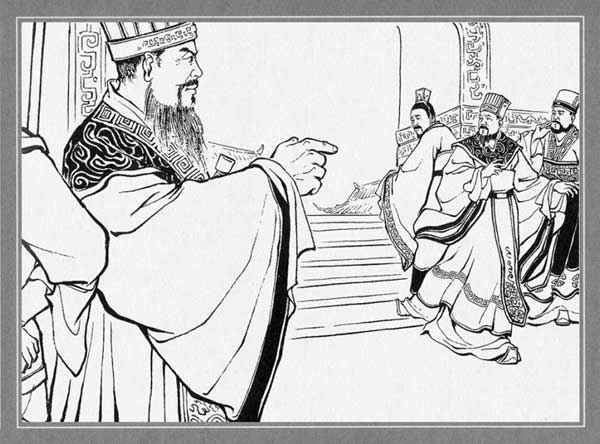
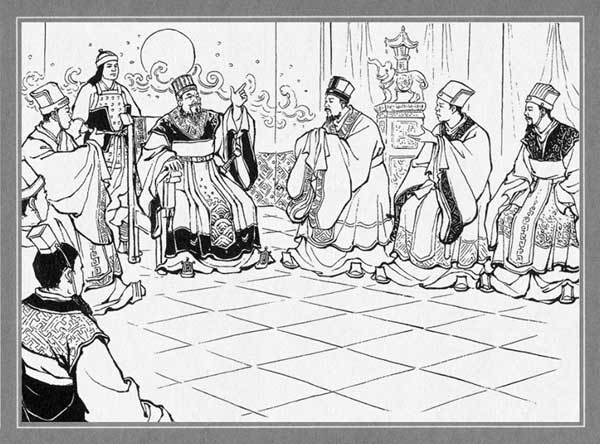
The
day after these events, Sima Shi assembled all the officers and addressed them
thus: "Our present lord is profligate and devoid of principle; familiar
with the vile and friendly with the impure. He lends a ready ear to slander and
keeps good people at a distance. His faults exceed those of the Prince of
Changyi of old, and he has proved himself unfit to rule. Wherefore, following
the precedents of Yi Yin and Huo Guang, I have decided to put him aside and to
set up another, thereby to maintain the sanctity of the ruler and ensure tranquillity.
What think you, Sirs?"
They all agreed, saying,
"General, you are right to play the same part as Yi Yin and Huo Guang,
thereby acting in accordance with Heaven and fulfilling the desire of
humankind. Who dares dispute it?"
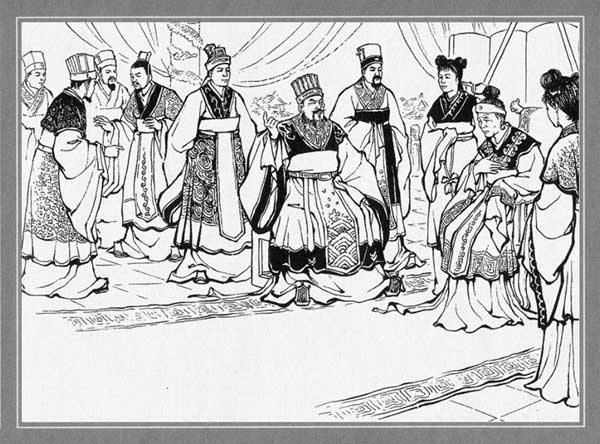
Then
Sima Shi, followed by the whole of the officials, went to the Palace of
Everlasting Peace and informed the Empress Dowager of his intention.
"Whom
do you propose to place on the throne, General?" she asked.
"I have observed that Cao Ju, Prince of Pengcheng, is intelligent,
benevolent, and filial. He is fit to rule the empire."
She
replied, "He is my uncle, and it is not convenient. However, there is Cao
Mao, Duke of Gaogui, and grandson of Emperor Pi. He is of mild temperament,
respectful, and deferential, and may be set up. You, Sir, and the high officers
of state might favorably consider this."
Then
spoke one, saying, "Her Majesty speaks well: Cao Mao should be raised to
the throne."
All
eyes turned toward the speaker, who was Sima Fu, uncle of Sima Shi.
The
Duke of Gaogui was summoned to the capital.
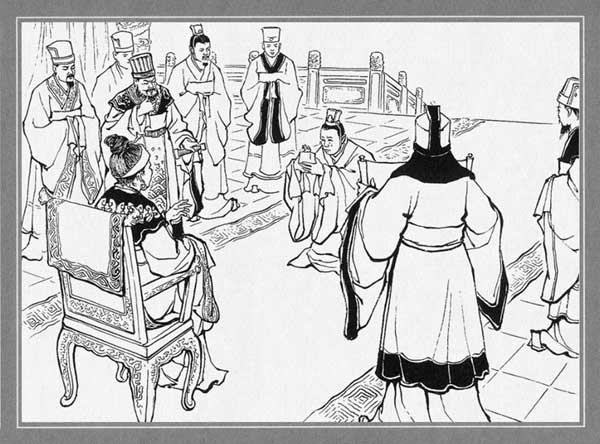
The
Empress called Cao Fang into her presence in the Hall of Principles and blamed
him, saying, "You are vicious beyond measure, a companion of lewd men and
a friend of vile women. You are unfitted to rule. Therefore resign the imperial
seal and revert to your status of Prince of Qi. You are forbidden to present
yourself at court without special command."
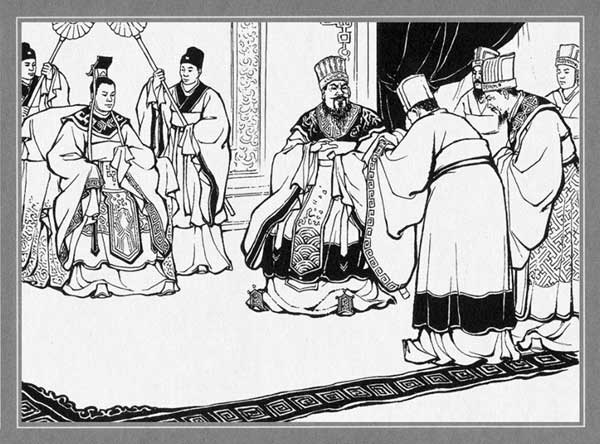
Cao
Fang, weeping, threw himself at her feet. He gave up the seal, got into his
carriage and went away. Only a few faithful ministers restrained their tears
and bade him farewell.
Cao Cao, the mighty minister of Han,
Oppressed the helpless; little then thought he
That only two score swiftly passing years
Would bring like fate to his posterity.
The
Emperor-elect Cao Mao was the grandson of Emperor Pi, and son of Cao Lin,
Prince of Donghai. When Cao Mao was nearing the capital, all the officers
attended to receive him at the Nanye Gate, where an imperial carriage awaited
him. He hastily returned their salutations.
"The
ruler ought not to return these salutations," said Grand Commander Wang
Su.
"I
also am a minister and must respond," replied he.
They
conducted him to the carriage to ride into the Palace, but he refused to mount
it, saying, "Her Majesty has commanded my presence; I know not for what
reason. How dare I enter the Palace in such a carriage?"
He
went on foot to the Hall, where Sima Shi awaited him. He prostrated himself
before Sima Shi. Sima Shi hastily raised him and led him into the presence.
The
Empress Dowager said, "In your youth I noticed that you bore the impress
of majesty. Now you are to be the Ruler of the Empire. You must be respectful
and moderate, diffusing virtue and benevolence. You must do honor to your ancestors---the
former emperors."
Cao
Mao modestly declined the proposed honor, but he was compelled to accept it. He
was led out of the presence of the Empress Dowager and placed in the seat of
empire in the Hall of Principles.
The
style of the reign was changed from Domestic Calm, the sixth year, to Right
Origin, the first year (AD 254). An amnesty was granted. Honors were heaped upon
Sima Shi, who also received the golden axes, with the right to proceed
leisurely within the precincts, to address the Throne without using his name,
and to wear arms at court. Many other officers also received promotions.
But
in the spring of the second year of Right Origin, it was reported at court that
Guanqiu Jian, General Who Guards the East, and Wen Qin, Imperial Protector of
Yangzhou, were raising armies with the declared design of restoring the deposed
emperor.
Sima
Shi disconcerted.
If ministers of Han have always faithful been,
Wei leaders, too, prove their loyalty are keen.
How
this new menace was met will appear in the next chapter.
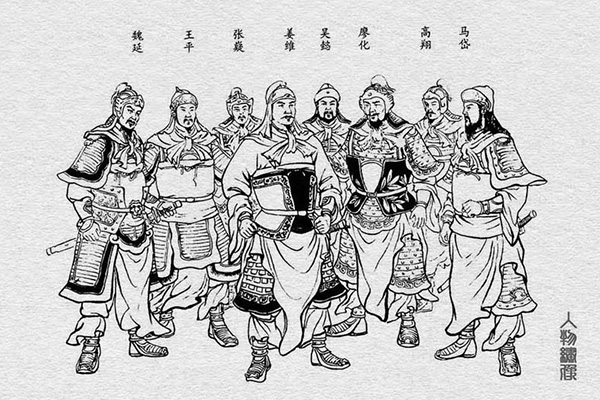
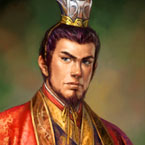
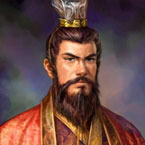
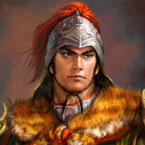
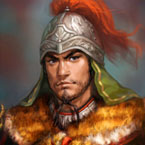
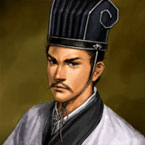
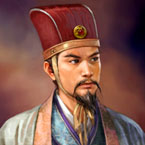
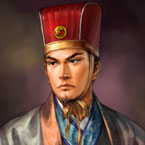
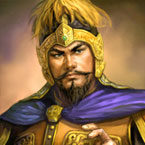
|
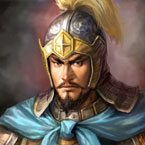
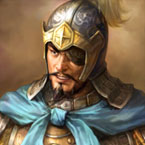
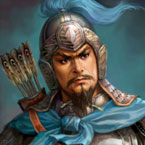
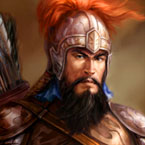
Wei
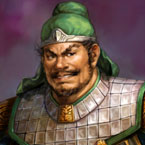
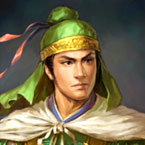
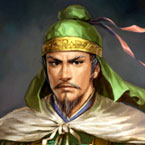
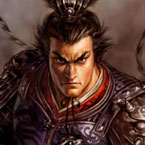
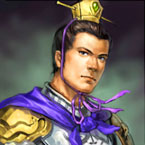
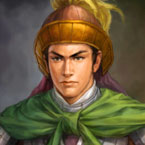
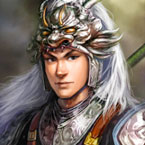
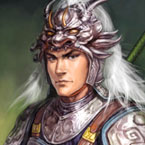
Yan & Wang Ping & Zhang Ni & Jiang Wei
& Wu Yi & Liao Hua & Gao Xiang & Ma Dai
|

|
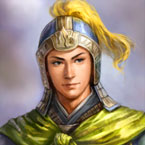
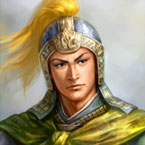
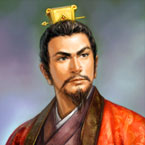
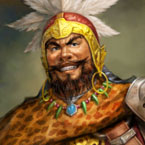
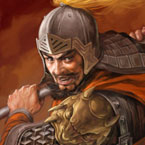
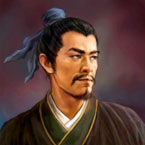
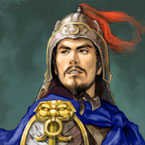
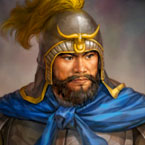
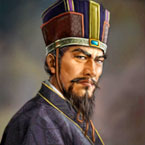
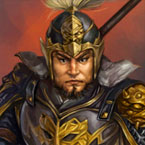
| Chen Tai & Xiahou Ba |
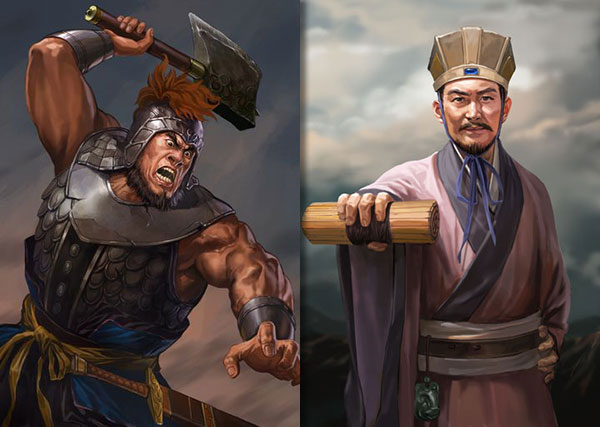
|
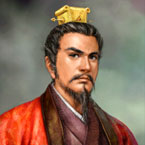
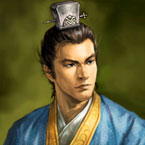
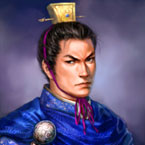
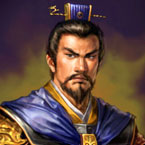
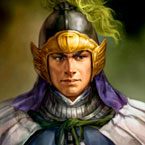
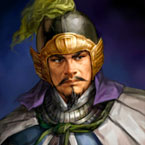
| Xu Zhi & Wang
Su |














 Xem bản tiếng Việt